
Align
Agree the priorities that matter most, define success, clarify leadership ownership and identify the internal capacity already available.
For schools leading significant curriculum, assessment, leadership or school-improvement priorities that benefit from continuity rather than isolated engagements.
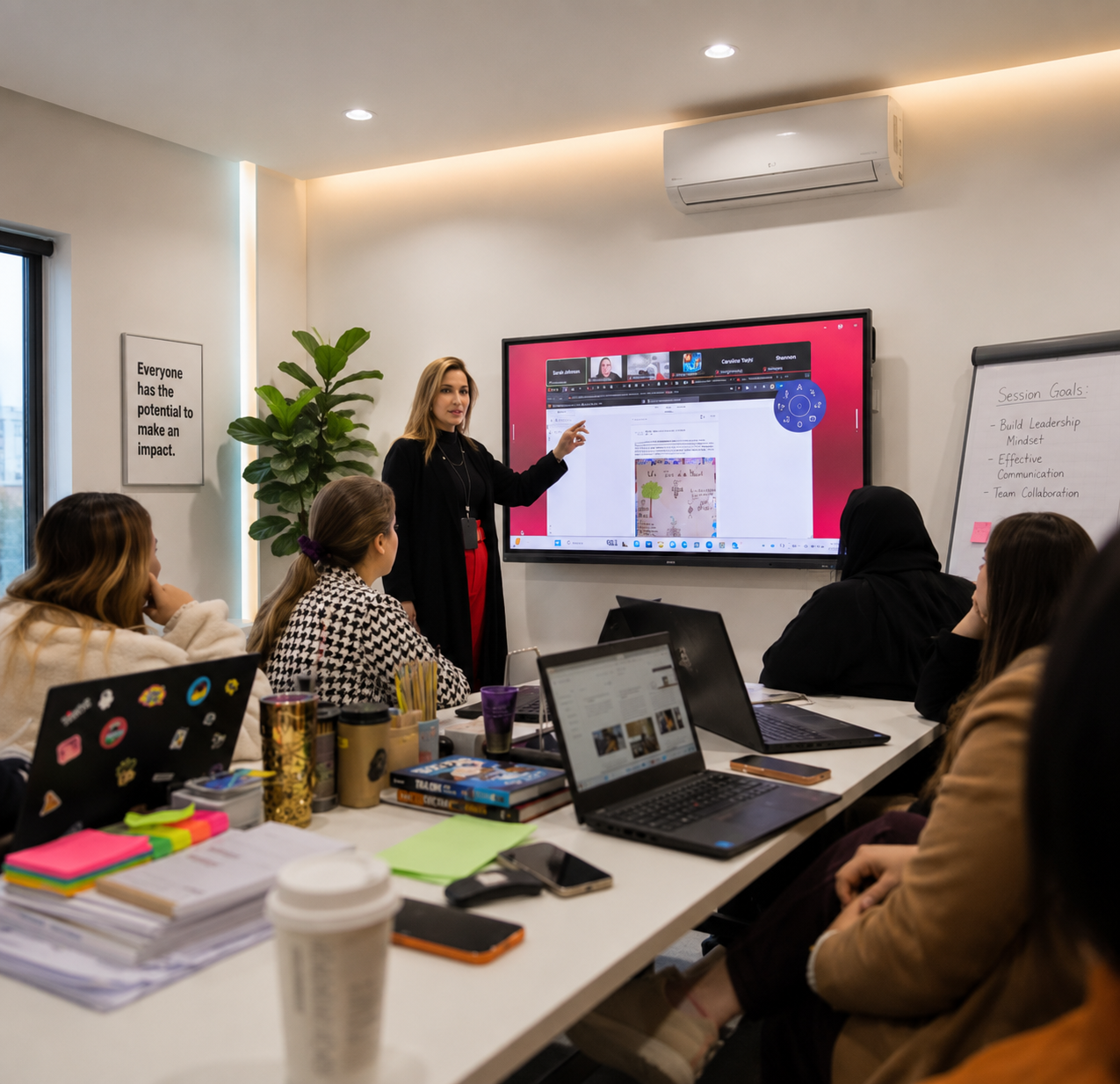
Your leadership team gains an experienced thought partner who understands your context and helps maintain momentum between milestones.
Curriculum, assessment, instructional leadership and school improvement rarely develop in isolation. As one system strengthens, another often needs attention.
A Strategic Partnership provides continuity across those stages, allowing connected priorities to move forward together while strengthening the school’s own internal capability.
Rather than beginning again with every new engagement, the partnership builds shared understanding, consistent momentum and practical support over time.
Many schools are best served through a focused audit, a defined project or a professional-learning programme.
A Strategic Partnership is designed for schools managing several connected priorities where continuity, implementation and leadership capacity matter more than one-off consultancy.
Strategic decisions, implementation support and capacity building remain connected through a clear, responsive rhythm.
Agree the priorities that matter most, define success, clarify leadership ownership and identify the internal capacity already available.
Support leaders as decisions become systems, routines and classroom practice through review, coaching and implementation support.
Monitor evidence, celebrate progress, solve implementation barriers and adjust the route before small issues become significant delays.
Strengthen internal leadership, documentation, routines and confidence so the work continues independently.
The exact relationship is agreed around your priorities, leadership capacity and improvement timeline. The work may shift in emphasis without losing the overall direction.
Depending on the agreed scope, a partnership may include:
A limited number of Strategic Partnerships are supported each year.
A Strategic Partnership is not a retainer for unlimited consultancy. It is an ongoing professional relationship built around agreed priorities.
Rather than responding to isolated requests, the work follows a shared improvement roadmap that can evolve as the school’s needs change.
The emphasis is always on building the school’s own capacity rather than creating dependence on external support.
Many Strategic Partnerships begin with a focused audit or defined consultancy project. This allows both parties to understand the school’s context before agreeing a longer-term relationship.
Others begin directly where leadership already has a clear improvement roadmap.
This model commonly supports:
Scope, cadence and outcomes are agreed before the work starts.
No. A Strategic Partnership is a structured professional relationship with agreed priorities, scheduled support and defined outcomes.
Not necessarily. Partnerships are scoped according to the school’s context and improvement priorities.
Yes. Improvement work evolves. The agreed roadmap can be reviewed and adjusted during the partnership.
No. Leadership decisions remain with the school. MylaEd works alongside leaders as an external strategic partner.
Yes. Support can be adapted for individual schools, multiple campuses or school groups.
Not every school follows every stage. The route reflects the clarity, capability and connected priorities already in place.
Clarity
Defined work
Build capability
Continuity, where appropriate
The intended destination
Tell us about the priorities your leadership team is balancing, the direction your school is taking or the systems you want to strengthen.
Together, we’ll decide whether a Strategic Partnership—or a smaller engagement—is the most appropriate next step.